
Sorting puzzle basics that transfer across games
Published
Most sort puzzles reward planning one or two moves ahead instead of tapping randomly. That does not mean you need to solve the whole board in your head. It just means you should make each move with a small reason behind it.
The same habits show up in water sort, ball sort, tube sort, and other color-ordering puzzles. The pieces may look different, but the underlying idea is the same: protect your options, keep a little room to work, and avoid creating a mess that is hard to undo.
Work from the edges
Empty slots and “free” containers are leverage. Prioritize creating a clean target stack or tube before mixing new colors. The edge of the board is often where your safest moves live, because it gives you a place to store colors without immediately trapping them.
If you are stuck, look for the move that improves the board without making it busier. A move that clears one color group or frees a container is often more useful than a move that simply looks tidy.
Avoid deadlocks
If a move traps a needed color behind a blocker, undo mentally before committing. Many games punish irreversible clutter.
A good habit is to ask: “What will this move block?” If the answer is “something important,” it is usually worth pausing. Deadlocks are often caused by small, impatient moves that looked fine in isolation but reduced your options later.
When a board starts to feel crowded, slow down. A single hasty tap can turn a solvable layout into a much longer recovery.
When in doubt, simplify
Reduce the number of distinct colors in play before chasing perfect stacks. Fewer moving parts means fewer mistakes.
That often means focusing on the most obvious pairing first, even if it is not the most elegant move. Cleaner stacks create future options, and future options are usually more valuable than a fancy-looking shortcut.
Think of it as reducing noise. The fewer mixed pieces you leave behind, the easier the next move becomes.
A simple rule that works across games
If you want one habit to remember, use this: protect open space, keep one step ahead, and avoid unnecessary mixing.
That rule works well because it scales. Early levels may only need one free slot. Harder levels may demand more careful sequencing. But the same idea still applies: make the board easier to work with, not harder.
Final note
Sorting puzzles feel relaxing because they are readable. You can usually see what is wrong right away. The challenge comes from choosing the move that makes the next three turns easier instead of just fixing the current one.
Once that clicks, the genre becomes much more enjoyable—and much less random.
More guides & tips
- 7 Water Sort Mistakes That Make Levels Harder Than They Need to Be
Learn the most common Water Sort mistakes, how to avoid dead ends, and how to recover when a board starts to look messy.
- Water Sort Online No Download: Why Browser Play Is the Fastest Way to Start
A practical guide to playing Water Sort directly in your browser and why no-download play is so convenient.
- Why Water Sort Stays Popular
A plain-language look at why Water Sort is easy to start, why it stays interesting, and how to enjoy it more.
Related games
 Cocktail Sort
Play Cocktail Sort online — pour colorful drink layers between glasses and organize each cocktail into a single-color serving in this themed sorting puzzle.
 Ball Sort Master
Play Ball Sort Master online — sort colored balls into matching tubes with smart moves and empty bottles to help you organize every stack.
 Ball Sort Puzzle
Play Ball Sort Puzzle online — a relaxing brain teaser where you sort colored balls into matching tubes, one strategic move at a time.
 Rope Color Sort 3D
Play Rope Color Sort 3D online — match and untangle colored ropes in a 3D puzzle that blends sorting with spatial reasoning.
 Good Sort Master
Play Good Sort Master online — a versatile sorting puzzle where you organize different types of items into their correct bins, shelves, and stacks.
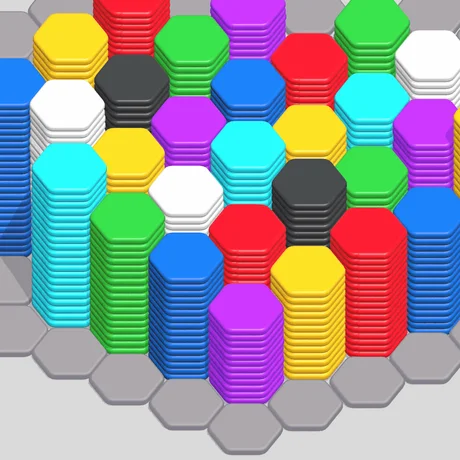 Hexagon Block Sort
Play Hexagon Block Sort online — drag hexagonal blocks into a grid and match colors to clear rows in this geometric twist on sorting puzzles.